
DORA Gap Analysis Methodology - Download Checklist 2026
Babar Khan Akhunzada
December 30, 2025
In the context of the Digital Operational Resilience Act (DORA), simply knowing the regulation exists is not enough. A DORA gap analysis methodology provides a structured way to map internal controls and practices against regulatory expectations, identify shortfalls, and establish a clear path from current state to regulatory alignment.
This explains how gap analysis works under DORA, outlines the step-by-step methodology, highlights the SecurityWall DORA GAP Analyzer, and shows how assessment outputs translate into actionable insights. For a broader overview, see our previous post on DORA compliance assessment and gap analyzer tool.
What a Gap Analysis Means Under the DORA Act
The Digital Operational Resilience Act requires financial organisations and certain ICT third-party providers to demonstrate that their operational risk frameworks, incident management, resilience testing, and vendor oversight meet explicit regulatory criteria. Regulators expect evidence that controls are aligned with DORA’s structure and supervisory standards.
A gap analysis is a structured diagnostic that compares what is in place with what the regulation explicitly requires. It is not just a maturity score; it is a comparison against regulatory language, supervisory expectations, and documented practices.
Why Methodology Matters
Without a consistent methodology, organisations risk misinterpreting DORA obligations. Common pitfalls include:
- Assuming general cyber security standards automatically satisfy DORA ICT requirements
- Treating incident reporting processes as compliant without verifying timelines and classification criteria
- Neglecting documentation that links governance decisions to management body accountability
A structured DORA gap analysis methodology ensures each control, policy, and process is evaluated against specific DORA obligations and technical standards.
Step-by-Step DORA Gap Analysis Methodology
DORA Gap Analysis requirements can be tough, to ease the process we made gap analyzer tool. But step by step methodology includes:
- Define the Regulatory Scope
Identify which DORA provisions apply to your organisation, covering both direct and indirect obligations via third-party interactions. - Translate Regulatory Text into Assessment Criteria
Convert high-level regulatory requirements into measurable criteria. Map obligations to tangible evidence, such as:- Board-approved risk frameworks
- Asset inventories
- Incident response procedures
- Testing schedules and outcomes
- Gather Evidence
Collect all relevant documentation, configurations, test results, and records. Prioritize items illustrating governance decisions, review cycles, and formalized procedures. - Evaluate Against Criteria
Compare evidence against the defined criteria. Identify where requirements are fully met, partially met, or unmet. Record root causes for each gap. - Categorise and Prioritise Gaps
Not all gaps are equal. Rank them by:- Impact on operational resilience
- Board-level accountability
- Supervisory significance
- Document Findings and Remediation Pathways
Create a structured report linking each gap to:- Relevant DORA articles or RTS/ITS provisions
- Evidence reviewed
- Root cause analysis
- Recommended remediation actions
- Ownership and timeline
This documentation serves both internal governance and external supervisory review.
Tool-Based Support: SecurityWall DORA Gap Analyzer
Manual assessment of DORA requirements can be overwhelming. The SecurityWall DORA GAP Analyzer simplifies the process by:
- Mapping organizational practices against DORA obligations
- Highlighting misaligned or missing controls
- Producing structured outputs for board-level reporting
The tool accelerates evaluations and provides a common language for risk discussions, without replacing professional oversight.
Explore methodology integration in our DORA compliance assessment and gap analyzer tool post.
Your DORA Compliance Report: Example Output
To illustrate the practical results, here’s an example assessment summary generated by the Gap Analyzer:
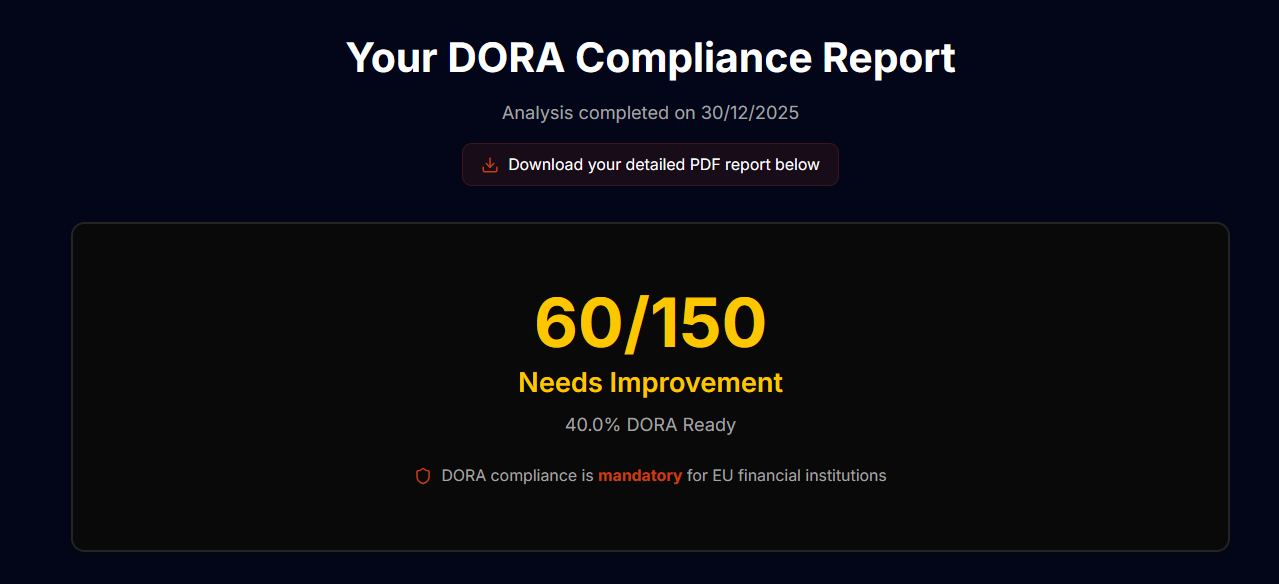
Overall Compliance: 40.0% DORA Ready (Needs Improvement)
Compliance Breakdown:
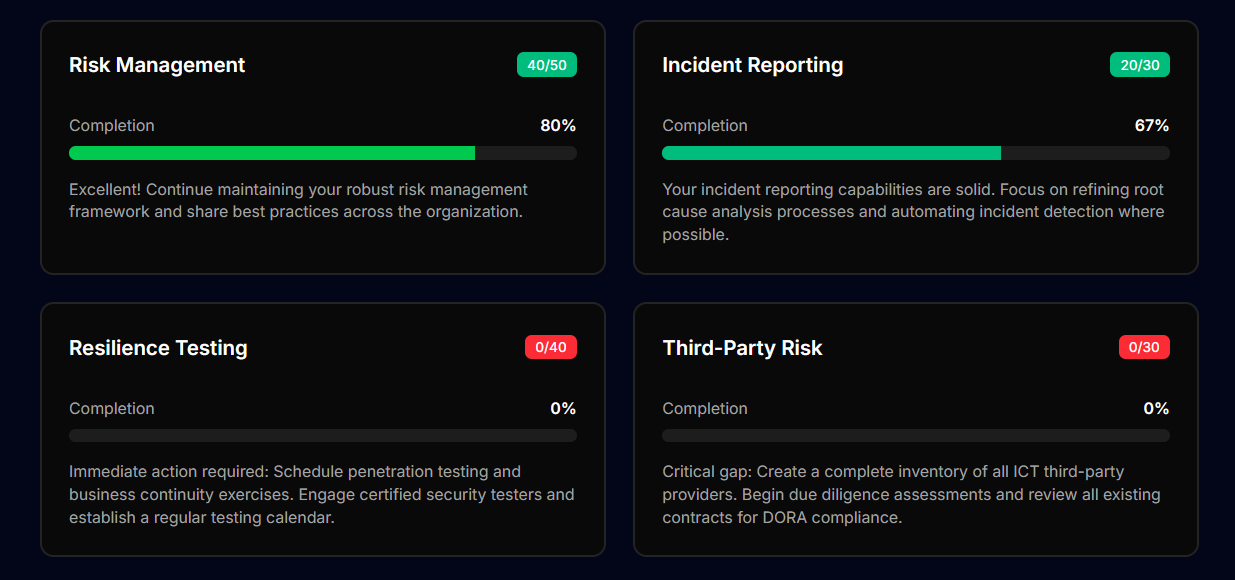
Download Your Detailed Report: Users receive a PDF with scores, category breakdowns, and actionable recommendations.

Support: Schedule a consultation with certified cyber security experts via our DORA Compliance Support page.

How Gap Analysis Drives Compliance Planning
Gap analysis outputs guide remediation efforts and strategic oversight:
- Align remediation with specific DORA articles
- Report progress to management and the board
- Provide defensible artefacts during supervisory engagement
By linking operational gaps to governance, organizations can demonstrate board-level accountability, a core DORA requirement.
Integrating Gap Methodology With Governance
DORA places responsibility for operational resilience on senior management and the board. A robust methodology connects findings to governance metrics, enabling leaders to:
- Understand regulatory exposure
- Prioritize strategic risk investments
- Validate remediation outcomes
- Demonstrate oversight aligned with DORA expectations
Downloadable DORA Gap Analysis Checklist
To facilitate internal audits, SecurityWall offers a methodology checklist that complements the Gap Analyzer. It includes:
- Regulatory scope mapping
- Assessment criteria templates
- Evidence collection guides
- Gap documentation tables
- Remediation planning structure
Download Checklist DORA Checklist 2026 - SecurityWall.pdf and integrate it with the DORA GAP Analyzer tool for full workflow support.
A structured DORA gap analysis methodology converts regulatory text into actionable evaluation criteria, identifies weaknesses, and supports remediation planning. With tools like the SecurityWall DORA GAP Analyzer, organizations can efficiently assess compliance, communicate findings to boards, and maintain regulatory readiness.
Identify compliance gaps and assess your readiness for the EU DORA regulation.
Run DORA Gap Analysis →Tags
About Babar Khan Akhunzada
Babar Khan Akhunzada leads security strategy, offensive operations. Babar has been featured in 25-Under-25 and has been to BlackHat, OWASP, BSides premiere conferences as a speaker.